

What to Do After a Car Accident
Most people who are involved in a car accident (we usually call them crashes, wrecks, or collisions) do not know what to do or not to do. That’s to be expected – most people who are in wrecks are not trained to deal with everything that comes with a wreck.
At the scene of the crash, Kilburn Landry Law Firm recommends you:
Remain as calm as you can, and be nice to everyone. That means the other driver, too. This is a stressful situation for everyone, and, likely, you, the other driver, and even bystanders are probably a mix of scared, angry, and worried. Getting angry or rude cannot help you. The calmer and nicer you are to others, the more they will want to help you, and you want them on your side.
Call the police. They may take a while to get there, and of course, everyone is in a hurry to get to work, school, or continue their day. You still need to make sure the police come out and do a report. Insurance companies love “he said, she said” about what happened in a wreck. The only way to ensure a fair report of what happened is to have the police do it. That’s not to say that police don’t ever make mistakes on reports – they do. But almost every police officer is now required to wear a body camera and record the entire investigation. That’s another reason to be calm. You don’t want to look mean, rude, or unreasonable on video that can be played to a jury.
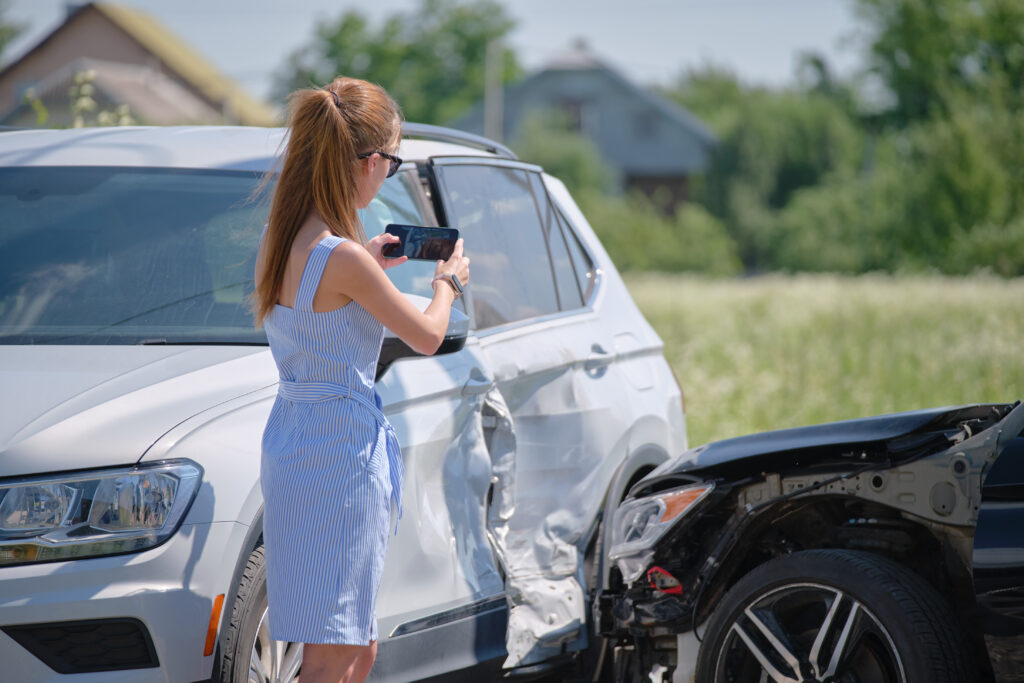
Take photographs before moving the vehicles. If you’re on a busy road, it’s almost certain that the people behind you are going to be honking, yelling, and even cursing for you to move your vehicle. You’ll feel pressure to move fast – Don’t. In fact, don’t move the vehicles until the police arrive. Take photos of your vehicle, the other vehicle, and the two vehicles where they came to rest. If you can, get a wide shot of the street signs and lights, license plates, and anything else that shows what happened.
Check on everyone. Be nice. If anyone needs help, give them whatever help you can. But don’t put yourself in greater danger to do so. Stay out of passing traffic, and make sure to check before stepping into the road to help someone out of their vehicle.
What Not to Do After a Car Accident

Say “I’m fine,” or “I’m not hurt.” In almost every accident, the first thing everyone says to each other is “are you ok?” Most of the time, the knee-jerk response is “I’m ok.” That’s usually true, but it’s not the whole story because a lot of the time, people don’t start hurting until later. Unfortunately, insurance companies will try to use that answer against you when you start hurting later on. It’s best to say something like “I’m not sure,” “I think I’m going to feel this later, but I’m ok right now,” or “I don’t think anything is broken.”
Admit fault or deny that anyone else is at fault. Another common set of discussions is how the wreck happened. It’s best not to tell anyone “It’s my fault,” or “it’s not your fault.” You might want to make the other person feel calmer by telling them it’s ok. But it’s likely their insurance company will hold that over your head for as long as they can. It’s best not to give in to talking about fault.
Take an ambulance when you don’t need it. Most of the time in low-speed wrecks, nobody has broken bones, major cuts, or life-threatening injuries. But the police will always offer to call an ambulance. Taking an ambulance when you don’t need it can backfire, factually and financially. Some folks take one to show they are hurt. But the police will still be recording you, and if you’re acting normally getting into an ambulance, that could give the wrong impression. Ambulances are also extremely expensive and take money out of your pocket. If you don’t need it, don’t take it.
What to Do in the Days After a Car Wreck
Call your own insurance company. Let them know about the wreck. Your insurance bill cannot go up unless the wreck was your fault, and you are required to report it. You don’t have to tell them everything, but it’s best they at least know about the wreck.
If you are feeling hurt, go to the doctor as soon as you can. If you have a primary care doctor, it’s best to start there. If not, an urgent care is appropriate. If you don’t have an emergency, it’s not necessary to go to the emergency room. Follow your doctor’s orders and advice.
Call Kilburn Landry Law. We’ll set an appointment to meet with you and talk about next steps, which usually include getting your car fixed, helping you find the next doctors, and setting up claims with the appropriate insurance companies. If you hire us, we’ll take it from there. We are here to help take the stress off you and handle the insurance companies, so you can focus on healing from injuries, getting back in your vehicle, and getting back to your normal life.
Things to Avoid in the Days After a Car Crash
Post online about the wreck or what you are up to. Facebook, Twitter, TikTok, Instagram, and every other social media network is free evidence for everyone. There’s a reason that the news talks about political tweets and posts. They’re free to get and easy to manipulate. Think of it like Court TV. Anything you say can and will be used against you. It’s best to just not say anything. Silence cannot be used against you.
Give a recorded interview. The insurance company for the other driver may call to ask what happened. They don’t have to tell you, but they are almost certainly recording you. Their job is not to get the truth. It’s to build a case against you. It’s best not to talk to the insurance company without first consulting with a lawyer. If you decide to answer questions, have them send them in writing. Don’t let them pepper you with questions and try to lead you into an answer you don’t really mean.
Accept a quick offer. A couple of days after the wreck, you’re probably going to get a second call from the other insurance company. They’re going to offer you a small amount. It sounds like they’re taking accountability and trying to make it easy. They’re not. In fact, they know if you keep going to the doctor, they’ll owe you more. So, they’re offering a quick, small amount, probably with a set-aside for medical bills. This benefits them. Not you. It’s a trap, and you should not fall into it. Accepting a small offer right at the beginning ensures you aren’t getting what you are truly owed and lets them off the hook for pennies on the dollar.
Need Legal Representation After a Collision?
For over fifteen years, Kilburn has focused on helping people recover from injuries and securing the justice they deserve. Injuries are personal. That’s why you need a personal injury lawyer. It’s personal to you, and it’s personal to us.
Call Kilburn Landry Law at 337-426-0005.